

Industrial Energy Management System

Home / Industrial Energy Management System

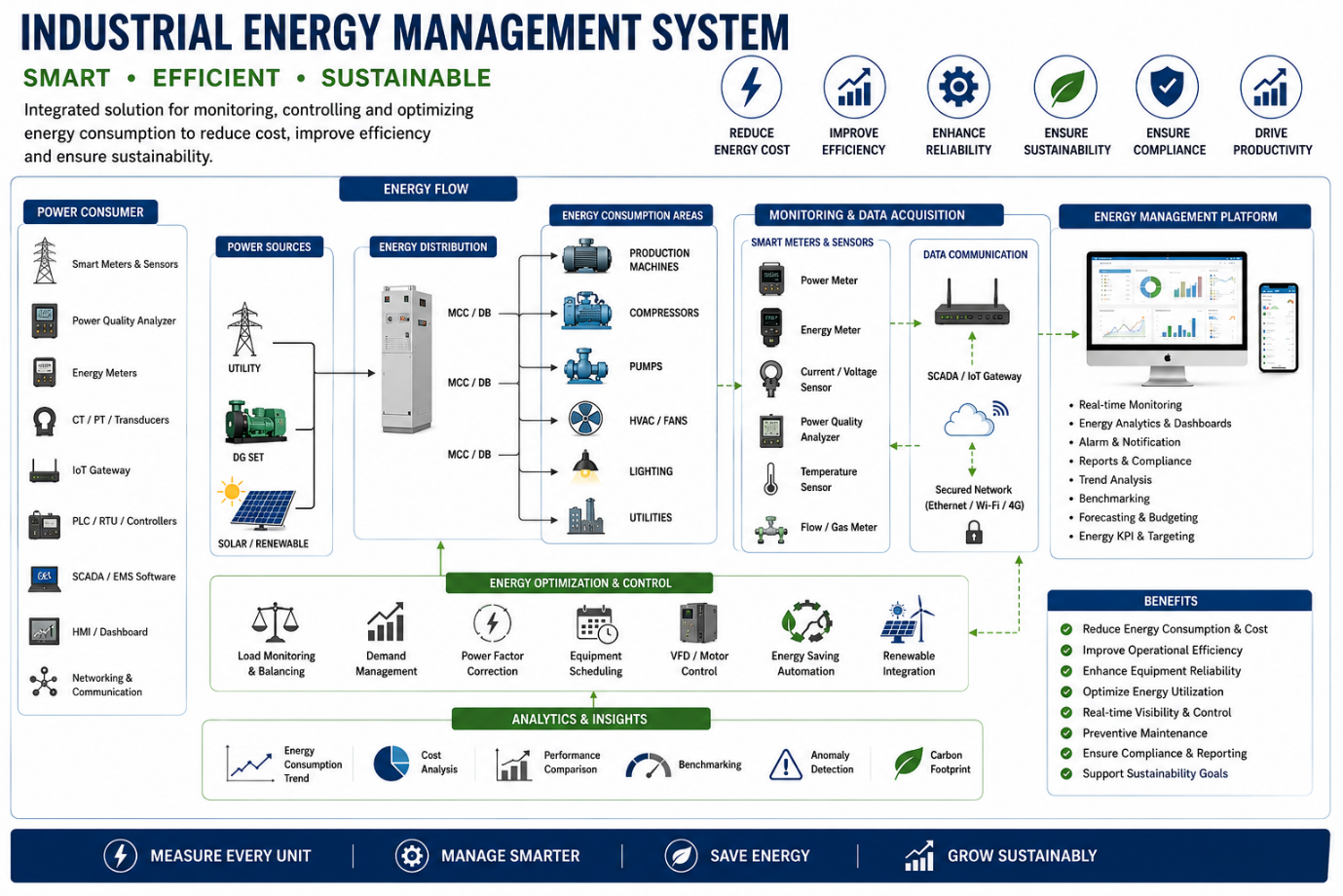
An Industrial Energy Management System (IEMS) is an intelligent solution designed to monitor, analyze, control, and optimize energy consumption across industrial facilities. It helps industries reduce energy costs, improve operational efficiency, enhance sustainability, and achieve regulatory compliance through real-time energy monitoring and automation.

Purpose of an Industrial Energy Management System

How It Works

Major Benefits

Energy Optimization Solutions

  • Industrial Power Factor Correction (PFC) System

    An Industrial Power Factor Correction (PFC) System is an energy management solution designed to improve the power factor of an electrical system by reducing reactive power and optimizing electricity usage. It helps industries lower electricity costs, improve system efficiency, reduce power losses, and avoid utility penalties.

Purpose of an Industrial PFC System

How It Works

Most industrial equipment such as motors, pumps, compressors, welding machines, and HVAC systems consume reactive power, which lowers the power factor. A PFC system automatically switches capacitor banks into the electrical network to compensate for reactive power and maintain the desired power factor level.

Major Benefits

Purpose of an Industrial VFD System

  • Industrial Variable Frequency Drives (VFD)

    A Variable Frequency Drive (VFD) is an advanced motor control system that regulates the speed and torque of electric motors by varying the frequency and voltage supplied to the motor. VFDs are widely used in industrial facilities to improve energy efficiency, optimize process control, and reduce operating costs.

How It Works

A VFD converts incoming AC power into DC power and then reconverts it into a controlled AC output with adjustable frequency and voltage. By changing the output frequency, the VFD precisely controls motor speed to match operational requirements.

Major Benefits

  • Industrial Demand Management System

    An Industrial Demand Management System is an energy optimization solution that monitors, controls, and manages electrical demand across industrial facilities. Its primary objective is to reduce peak power consumption, avoid utility demand penalties, optimize energy usage, and lower overall electricity costs without affecting production efficiency.

Purpose of an Industrial Demand Management System

How It Works

The system continuously monitors real-time power consumption using smart energy meters and control software. When demand approaches a predefined limit, non-critical loads are automatically shifted, reduced, or temporarily disconnected to prevent peak demand spikes.

Major Benefits

Purpose of an Industrial Load Monitoring & Scheduling System

  • Industrial Load Monitoring & Scheduling System

    An Industrial Load Monitoring & Scheduling System is an intelligent energy management solution that continuously monitors electrical loads and schedules equipment operation to optimize energy consumption, reduce peak demand, and improve overall operational efficiency. It helps industries manage power usage strategically while maintaining uninterrupted production.

How It Works

The system collects real-time data from energy meters, sensors, and electrical panels. Using PLC, SCADA, or Energy Management Software, it analyzes load patterns and automatically schedules equipment operation based on production requirements, tariff structures, and energy demand limits.

Major Benefits

  • Industrial Renewable Energy Integration

    Industrial Renewable Energy Integration is the process of incorporating renewable energy sources such as solar, wind, biomass, and energy storage systems into industrial operations. It helps industries reduce electricity costs, lower carbon emissions, improve energy security, and achieve sustainability goals while maintaining reliable production processes.

Purpose of Industrial Renewable Energy Integration

How It Works

Renewable energy systems generate clean electricity, which is integrated with the facility’s existing power infrastructure. Intelligent energy management systems monitor generation, consumption, storage, and grid interaction to optimize energy usage and maximize savings.

Major Benefits